|
|
Excerpt from "A Brush Stroke for Every Human Suffering" - Ari Siletz, Media Watch
"This instance of hyperrealism is a performance art.
Viewers are deliberately made to notice the amazing amount of time and painstaking effort that went
into portraying this Darfur refugee. Peterson isn't showing off; he is a radical painter, compelling
us with his dedication. The astonishing realism is the result of every wrinkle and twist of hair being
colored and shadowed in the context of reflected light from every other object in the scene. Whereas
the camera does this mindlessly as a matter of optics, this artist has endured whatever it took to make
sure human eyes do not respond as mindlessly. We can flip the page on a Newsweek photo, worth a click
of the camera, but we can’t as easily turn away from such an extraordinary labor of compassion."
|
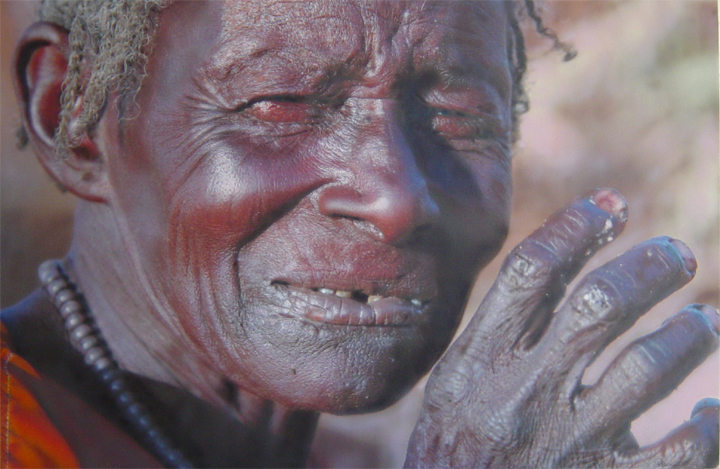 Don't Shed No Tears Acrylics on canvas 24"x36" .................................
Courtesy of Art Info
Don't Shed No Tears Acrylics on canvas 24"x36" .................................
Courtesy of Art Info
DENIS PETERSON and HYPERREALISM: "Following POP Art in the late 1960's,
photorealism
became the mainstream genre and has continued to produce iconic photo-like paintings depicting
banal realities of daily life.
In the recent splinter movement of
hyperrealism,
Peterson's semiotic paintings are more deliberate polymorphic illusions
of reality and considerably less monolithic than those found in traditional
photorealism.
As a counter culture school
of art, hyperrealism seems to incorporate POP culture within an existential frame of reference. At times phantasmagorical,
these optically convincing images are often their own simulacra - altered
realities challenging verisimilitude, perception and illusion." L'Aperitivo Illustrato Magazine
|